What exactly is caffeine?
Caffeine is a stimulant that is found naturally in the fruit, leaves and beans of coffee, cacao and guarana plants. It is most often consumed as coffee, tea, cocoa, chocolate, cola, guarana and energy drinks.
How does it work?
Once consumed caffeine is quickly absorbed into the bloodstream, hitting its peak effectiveness between 40-60 minutes. The main effect is in the brain where caffeine blocks the effects of the neurotransmitter adenosine. Adenosine acts to relax the brain and induce sleepiness, drowsiness and fatigue. The blocking of adenosine can lead to a relative increase in dopamine and adrenaline levels giving rise to heightened feelings of alertness, mood, motivation and focus and so enhances our perception of performance. The amount of caffeine in the blood takes around 3-6 hours to reduce by half but depending on the individual it can be as short as 1 hour and as long as 10. This caffeine clearance rate is genetically determined but can be decreased by food consumption, pregnancy and hormonal medications like the oral contraceptive pill and increased by nicotine and heavy caffeine consumption.
Benefits.
Caffeine is a stimulant and so it can improve alertness, reaction time and short-term recall. Other benefits of regular, moderate caffeine consumption may include:
- Reduced risk of heart disease.
- Possible reduction of risk of Parkinson’s and Alzheimer’s disease.
- Lower risk of Type 2 diabetes.
- Lower risk of depression.
- Increased endurance performance when consumed 1 hour pre-exercise.
Negative effects.
Research is unclear but suggests that healthy adults can safely consume 400mg of caffeine across the day (that’s around 3-5 cups of coffee depending on your choice of brew) with no more than 200mg in one dose being recommended. Of course, some people who are particularly sensitive may be adversely effected by this dose. Adverse effects include:
- Increased feelings of anxiety, restlessness and irritability.
- Tremors.
- Rapid heard rate.
- Increased blood pressure.
- Headaches and migraines.
- Caffeine toxicity has been observed with intakes of 1.2 grams in one dose. A 10-14 grams dose is believed to be fatal.
Some interesting facts.
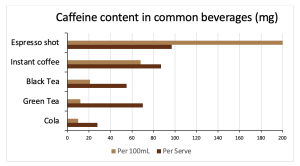
- Your coffee order, even if the same each day, from the same outlet can have different caffeine content dependent on the brewing, grind, freshness and types of beans.
- Decaffeinated coffee contains negligible amounts of caffeine but interestingly can offer similar health benefits, most likely due to other compounds within the bean.
- Caffeine passes across the placenta and so should be avoided or limited during pregnancy.
- Many medications contain caffeine. Caffeine can also interact with medications by either increasing or decreasing their effectiveness depending on the medication type.
- Caffeine may increase metabolism due to its ability to stimulate the nervous system. However, this equates to around 79 calories per day – about the same as a one egg or a cup of blueberries.
- Caffeine is addictive and many people experience withdrawal symptoms such as headache, nausea and irritability when going without. When reducing caffeine do so gradually to avoid these symptoms.
The Bottom line….
- Listen to your body and adjust caffeine intake accordingly.
- Your caffeine of choice, and how it is served, can contribute significantly to overall energy intake so pay attention to any extra sugar and fats when making your order.
- As with most things in life moderation is key. Any benefits that caffeine may bring can be negated by excess consumption.